When the gavel came down on Monday morning, no one expected the week to spiral into legislative bedlam. But within 72 hours, House Speaker Mike Johnson found himself at the epicenter of a political maelstrom—facing down rebellions, backdoor deals, and a growing sense among lawmakers that “it’s going to be a circus.” That phrase, muttered by a senior aide during a closed-door meeting, quickly leaked, capturing the mood of Capitol Hill as Johnson battled to maintain order in a fracturing Republican conference.
This wasn’t just another rough week in Washington. It was a stress test of Johnson’s leadership, his coalition-building skills, and his ability to survive in a role defined by razor-thin margins and maximalist demands.
The Breaking Point: A Week That Unraveled Quickly
It started with a seemingly routine vote on foreign aid—a package bundling military support for Ukraine, Israel, and Taiwan. Johnson, aiming to thread the needle between hardline isolationists and mainstream Republicans, crafted a narrowly tailored bill meant to appease both factions. But the compromise satisfied nearly no one.
On Tuesday, hard-right members led by Rep. Marjorie Taylor Greene and Rep. Chip Roy escalated their opposition, accusing Johnson of betraying conservative principles. By Wednesday morning, the Freedom Caucus had circulated a letter questioning his leadership—just days after Johnson claimed unity within the GOP ranks.
The breaking point came during a closed-door Republican conference meeting. Tempers flared. Accusations flew. And as Johnson tried to defend the process, one member shouted, “You’re not speaking for us!” An aide later described the scene as “controlled chaos”—except the control was slipping.
That’s when the now-infamous phrase emerged: “It’s going to be a circus.”
Leadership Under Fire: Johnson’s Tightrope Walk
Mike Johnson has never held a high-profile national role before becoming Speaker. His background as a constitutional lawyer and staunch social conservative made him palatable to the party’s base, but his lack of deep institutional relationships left him vulnerable when unity was needed most.
This week exposed those weaknesses.
Unlike predecessors like Kevin McCarthy or Nancy Pelosi, Johnson lacks a long track record of dealmaking. He ascended to power not through dominance, but survival—elected on the 15th ballot after McCarthy’s ouster, propped up by a fragile alliance between moderates and far-right insurgents.
Now, that alliance is fraying.
Johnson spent days shuttling between factions: meeting with centrists in the Tuesday lunch session, hosting hardliners in the Speaker’s hideaway, and taking private calls with former President Trump. Each conversation demanded a different message. To moderates, he promised process and stability. To the right, he pledged loyalty and conservative wins.
But the balancing act is unsustainable. Every concession to one side inflames the other. And with the debt ceiling debate looming and border security legislation stalled, the pressure is only building.
The Circus Metaphor: More Than Just Noise
Calling it a “circus” wasn’t hyperbole—it was diagnosis.
A circus implies spectacle, unpredictability, and performers chasing attention. That’s exactly what unfolded:
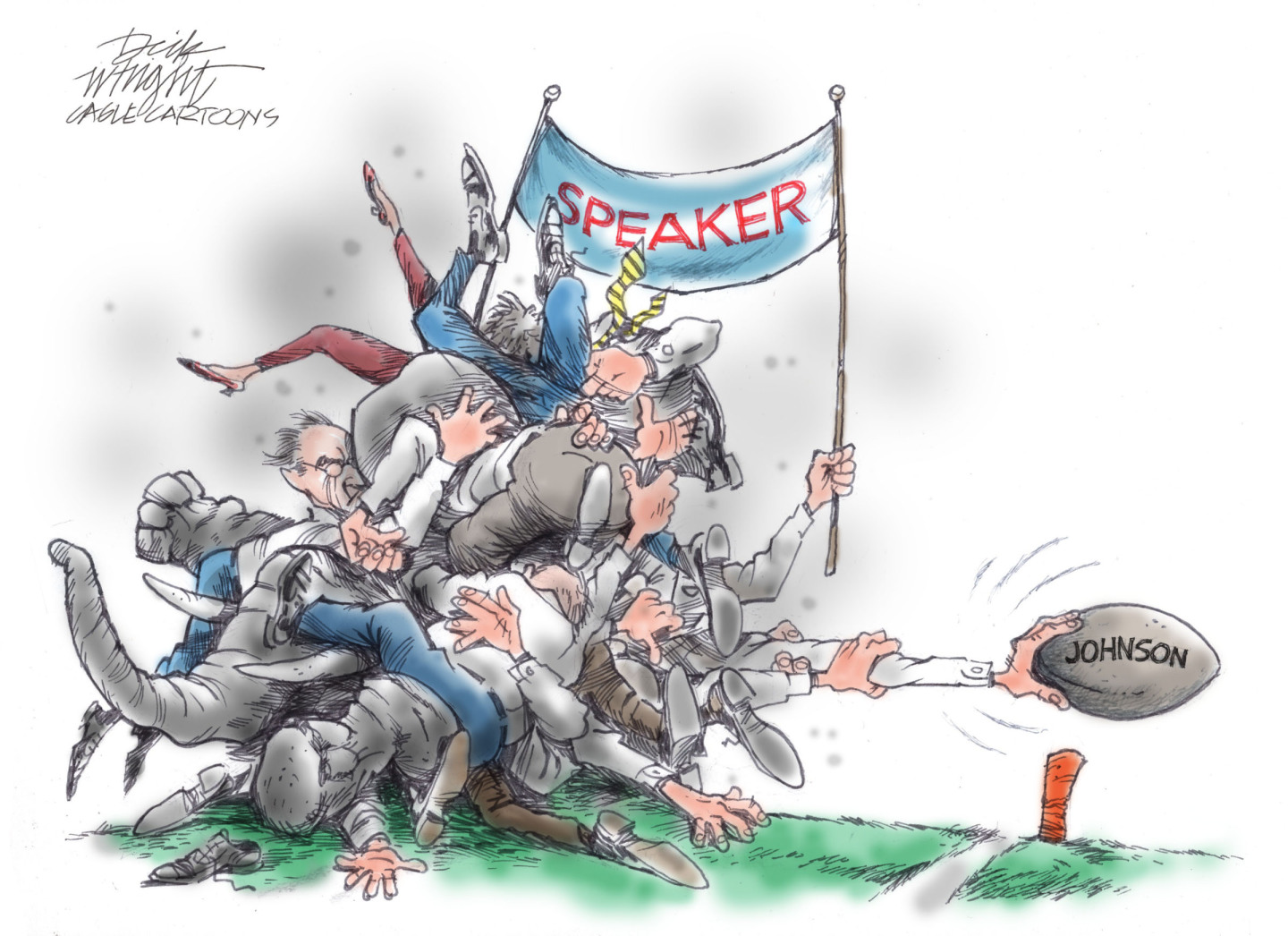
- Media frenzy: Cameras camped outside the Capitol, chasing quotes from angry lawmakers.
- Theatrics over substance: Rep. Paul Gosar staged a press conference holding a copy of the Ukraine aid bill taped shut, calling it a “spending monster.”
- Backstage maneuvering: Rumors swirled of a potential motion to vacate—the same procedural weapon that toppled McCarthy.
But beneath the circus imagery lies a deeper institutional rot. The House, once a body governed by norms and seniority, now operates on brinkmanship and viral moments. The tools of governance—rules, procedures, committee work—are being treated like props.
Johnson isn’t the cause of this chaos. But as Speaker, he’s responsible for managing it. And this week, management was in short supply.
The Ukraine Aid Debacle: A Case Study in Misjudgment
The foreign aid package was supposed to be Johnson’s win. With bipartisan support in the Senate and public backing from President Biden, the path seemed clear.
But Johnson miscalculated two key elements.
First, the timing. Scheduling the vote mid-week, without full GOP buy-in, gave insurgents time to organize. In past Congresses, leadership would’ve secured commitments in advance. This time, members were blindsided—some learning about the vote from Twitter.
Second, the packaging. By bundling Ukraine, Israel, and Taiwan aid together, Johnson handed opponents a larger target. Hardliners could oppose the entire bill by focusing on Ukraine, while claiming they supported Israel and border security.
The result? A failed rule vote on Thursday, forcing Johnson to delay the full chamber consideration. The bill didn’t die—but it didn’t advance, either. And Johnson’s credibility took a hit.
Lawmakers who supported the aid were frustrated. “We had the votes,” said one moderate Republican. “But the Speaker didn’t do the work to count them.”
Behind Closed Doors: The Speaker’s Survival Tactics
Even in crisis, Johnson isn’t passive.
Behind the scenes, he deployed a mix of persuasion, procedural maneuvering, and strategic retreats.
On Thursday night, he convened a meeting with the Republican Study Committee—the largest conservative bloc in the House. Instead of defending the bill, he listened. He took notes. He acknowledged concerns about oversight and waste.
Then, he offered a concession: a requirement for quarterly Pentagon audits on Ukraine spending, paired with a standalone border security bill the following week.
It was a classic move—give something small to delay something big.
He also leveraged his relationship with Trump, who issued a vague but supportive statement: “Mike is fighting for our values. Don’t let the radicals win.”
That endorsement mattered. For many far-right members, Trump’s approval is the only currency that counts.
By Friday, the immediate threat of a motion to vacate had receded. The circus hadn’t ended—but the ringmaster had regained partial control.
The Cost of Chaos: What
This Week Reveals
This grueling week wasn’t just about one bill or one vote. It exposed systemic vulnerabilities in the House—and in Johnson’s leadership model.
1. Thin margins breed instability. With Republicans holding just a 219–213 majority (with three vacancies), losing five members can kill any bill. Johnson has no margin for error.
2. Loyalty is transactional. Support from the Freedom Caucus isn’t ideological—it’s negotiated. One week they back the Speaker; the next, they plot his downfall. Johnson must constantly renegotiate his right to lead.

3. Process matters less than perception. In the past, controlling the legislative calendar meant power. Now, a viral clip or leaked audio can shift momentum faster than any rule change.
4. The media-politics feedback loop accelerates crises. Every outburst, every closed-door leak, is amplified instantly. A private complaint becomes a headline before the meeting ends.
Johnson’s challenge isn’t just passing bills—it’s restoring a sense of predictability. Without it, every week risks becoming another circus.
What Comes Next: The Road Beyond the Chaos
The immediate crisis has cooled, but the pressure hasn’t vanished.
Next week, Johnson must deliver on his promise: a border security bill with tough enforcement measures and asylum reforms. The goal is to satisfy conservatives while avoiding a government shutdown.
But the same dynamics remain. The far right wants stricter language. Moderates fear alienating swing districts. Democrats are waiting for an opening to force bipartisan talks.
Johnson’s options are narrowing.
He could go it alone—ram through a hardline bill with minimal Democratic support. That might please the base but risks another revolt if it fails in the Senate.
He could pivot to bipartisanship—like his Ukraine aid effort—but that risks being labeled a “RINO” by his own conference.
Or he could delay, using procedural tactics to buy time. That’s the safest path, but it fuels the very gridlock critics decry.
No matter the choice, the spotlight won’t fade. Johnson is now a permanent fixture in the national narrative—not just as Speaker, but as a symbol of a GOP at war with itself.
Calm After the Storm? Leadership Lessons from the Week
Amid the chaos, a few lessons stand out for Johnson—and for future leaders navigating divided government.
Count votes early, not late. Assumptions are dangerous. If Johnson had known the bill lacked support on Monday, he could’ve adjusted strategy—rewritten provisions, delayed the vote, or dropped it altogether.
Control the narrative. Letting opponents define the debate is fatal. Johnson was reactive all week. A stronger leader would’ve framed the aid package as supporting allies and American security—then stayed on message.
Use institutional tools proactively. The Rules Committee, special orders, discharge petitions—these aren’t just mechanics. They’re levers of power. Johnson used few of them, ceding initiative to rebels.
Build alliances before they’re needed. Leadership isn’t just crisis management. It’s relationship-building during calm. Johnson’s weak ties with moderates and centrists left him isolated when push came to shove.
The best Speakers don’t just survive—they anticipate. They create stability so others can govern. Johnson survived this week. But governing? That’s still in question.
A Fragile Calm: What We Learned
Mike Johnson made it through the week. The circus didn’t topple him. But it exposed the precariousness of his position and the deeper dysfunction in the House.
He’s not a weak man—his legal background, conviction, and loyalty to conservative causes are real. But leadership in this era demands more than ideology. It demands stamina, finesse, and the ability to absorb chaos without breaking.
As one veteran staffer put it: “The job isn’t to stop the circus. It’s to keep the tent from collapsing.”
Johnson kept the tent standing. For now, that’s enough.
But next week could bring a new storm. And the next. And the next.
The only certainty? In today’s House, calm is temporary. The circus is always coming back.
FAQ
What should you look for in Inside Mike Johnson’s Grueling Week: Chaos, Calm, and Control? Focus on relevance, practical value, and how well the solution matches real user intent.
Is Inside Mike Johnson’s Grueling Week: Chaos, Calm, and Control suitable for beginners? That depends on the workflow, but a clear step-by-step approach usually makes it easier to start.
How do you compare options around Inside Mike Johnson’s Grueling Week: Chaos, Calm, and Control? Compare features, trust signals, limitations, pricing, and ease of implementation.
What mistakes should you avoid? Avoid generic choices, weak validation, and decisions based only on marketing claims.
What is the next best step? Shortlist the most relevant options, validate them quickly, and refine from real-world results.